

Choosing the Right Pixel Pitch for Rental LED Screens
Understanding Pixel Pitch: What You Need to Know for Rental LED Screens
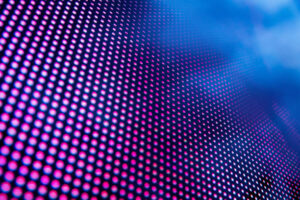
Pixel pitch is one of the most important specifications when selecting rental LED screens. It refers to the distance between the centers of two adjacent pixels, measured in millimeters.
This specification directly affects screen resolution, image sharpness, and the recommended viewing distance. Generally, a smaller pixel pitch places pixels closer together, resulting in higher pixel density and finer image details. Conversely, a larger pixel pitch provides lower pixel density and may appear less detailed when viewed from a short distance.
For rental LED displays, P2.6, P3.9, and P4.8 LED screens are common options for different event environments. For example, P2.6 offers higher image detail and works well for close-viewing applications, such as trade shows, corporate presentations, and smaller indoor venues.
By comparison, P3.9 and P4.8 are better suited to medium and large venues. Since audiences typically view these screens from farther away, their lower pixel density can still provide an effective visual experience while helping control rental costs.
Therefore, understanding pixel pitch is essential when choosing an LED display for an event. The right specification should match the viewing distance, venue size, screen dimensions, and content requirements.
For instance, using a P2.6 LED screen in a large venue may provide more resolution than viewers can actually perceive. As a result, the additional investment may not deliver a proportional benefit. By matching pixel pitch with the audience’s viewing position, rental providers can improve visual performance while optimizing equipment costs.
P2.6 vs. P3.9 vs. P4.8: Pixel Pitch Comparison
When comparing rental LED screen pixel pitch, buyers should consider more than resolution alone. Pixel pitch also influences viewing distance, application range, equipment cost, and overall visual performance.
The three commonly used options—P2.6, P3.9, and P4.8—serve different event requirements.
| Pixel Pitch | Resolution | Recommended Viewing | Typical Applications | Main Advantage |
|---|---|---|---|---|
| P2.6 LED Screen | High | Short distance | Trade shows, studios, corporate events, exhibitions | Excellent image detail |
| P3.9 LED Screen | Medium-high | Medium distance | Concerts, conferences, exhibitions, general events | Balance of quality and cost |
| P4.8 LED Screen | Standard | Long distance | Outdoor festivals, sports events, advertising | Large-format visibility |
P2.6 LED Screen: High-Resolution Applications
First, P2.6 LED screens are designed for applications where image quality and close-range viewing are important. Their smaller pixel pitch creates higher pixel density, allowing the display to reproduce fine details more clearly.
As a result, P2.6 is particularly suitable for indoor events, broadcasting environments, corporate presentations, exhibitions, and premium brand displays.
Moreover, audiences positioned relatively close to the screen can better appreciate the additional image detail. Therefore, P2.6 is often preferred for projects where visual quality is a major purchasing criterion.
P3.9 LED Screen: A Versatile Rental Solution
In contrast, P3.9 LED screens provide a practical balance between image quality and rental cost. This makes them one of the most versatile choices for professional LED screen rental providers.
For example, P3.9 can support corporate events, concerts, exhibitions, conferences, stage backgrounds, and other medium-to-large applications.
Because viewers are usually positioned farther from the screen, P3.9 can provide sufficient image clarity without the higher investment associated with finer pixel pitches. Therefore, it is often an effective general-purpose rental LED display.
P4.8 LED Screen: Large Outdoor Applications
Meanwhile, P4.8 LED screens are commonly selected for large outdoor displays and long-distance viewing environments. Their larger pixel pitch allows rental companies to build large-format LED screens while maintaining practical equipment costs.
In addition, P4.8 displays are suitable for applications such as outdoor festivals, sporting events, public events, and advertising screens.
Although P4.8 provides less pixel density than P2.6 or P3.9, this difference becomes less noticeable when viewers stand farther away. Consequently, P4.8 can deliver strong visibility for large audiences without requiring unnecessary investment in fine-pitch technology.
How Rental Providers Should Select LED Pixel Pitch
For LED screen rental companies, maintaining the right pixel pitch inventory is essential. Instead of focusing on a single specification, providers should build a product portfolio around different event requirements.
Make P3.9 the Core Rental Inventory
For many rental providers, P3.9 LED screens can serve as the core inventory. They offer a strong combination of image quality, application flexibility, and cost efficiency.
Therefore, P3.9 can support a broad range of rental projects, including corporate events, concerts, exhibitions, conferences, and stage productions.
This versatility allows rental companies to serve more customers without investing exclusively in premium fine-pitch displays.
Add P2.6 for Premium Close-Viewing Events
However, rental providers should also consider maintaining a selection of P2.6 LED screens.
These displays are particularly valuable for projects where audiences sit close to the screen or where detailed visual content is essential. For example, fashion events, broadcasting, premium exhibitions, advertising campaigns, and high-end corporate events can benefit from the additional resolution.
Therefore, P2.6 can complement a standard P3.9 rental inventory and help providers serve higher-value projects.
Stock P4.8 for Outdoor Events
At the same time, demand for large outdoor LED displays makes P4.8 LED screens an important addition to a rental portfolio.
These screens are suitable for larger viewing distances and high-capacity events. Depending on the specific product design, outdoor models can also provide appropriate protection against changing weather conditions.
As a result, P4.8 can help rental companies expand into outdoor festivals, sporting events, concerts, and large-scale advertising applications.
Build a Data-Driven LED Rental Inventory
Ultimately, inventory planning should reflect actual market demand. Rental providers can track booking frequency, venue types, viewing distances, screen sizes, and customer requirements.
This information can then guide future equipment purchases. For example, consistently high demand for close-viewing applications may justify additional P2.6 inventory. Conversely, frequent outdoor bookings may indicate a stronger need for P4.8 screens.
By maintaining a balanced combination of P2.6, P3.9, and P4.8 LED screens, rental companies can respond more effectively to different customer requirements.
When Should Rental Providers Upgrade to a Finer Pixel Pitch?
As LED display technology continues to evolve, rental companies must carefully evaluate when upgrading to a finer pixel pitch makes financial and operational sense.
Consider the Potential ROI
First, rental providers should evaluate return on investment (ROI). A finer pixel pitch can significantly improve image clarity, particularly when audiences are positioned close to the display.
Therefore, premium image quality may allow rental companies to attract higher-value customers and charge higher rental rates. However, the additional revenue should justify the increased equipment investment.
Monitor Market Demand
Next, market demand should influence upgrade decisions. Event organizers increasingly expect high-quality visual experiences, especially for premium corporate events, exhibitions, broadcasting, and brand activations.
Consequently, rental companies with fine-pitch LED displays may gain a competitive advantage in markets where image quality strongly influences purchasing decisions.
Consider LED Technology Development
Technology development also affects the upgrade cycle. As LED display technology advances, finer pixel pitch products may become more accessible and cost-effective.
At the same time, rental providers should evaluate the age and condition of their existing equipment. If current LED panels are approaching the end of their useful service life, upgrading to newer fine-pitch technology may provide greater long-term value.
Balance Performance, Demand, and Investment
Ultimately, upgrading pixel pitch requires a balance between visual performance, customer demand, equipment cost, and long-term ROI.
Rather than automatically choosing the smallest available pixel pitch, rental companies should identify the applications that generate the greatest business value. This approach helps ensure that new LED display investments support both customer expectations and sustainable business growth.
Technical Summary
Pixel pitch plays a critical role in determining the performance and application range of a rental LED screen.
P2.6 is well suited to close-viewing and premium applications that require high image detail. P3.9 provides a practical balance between visual quality and cost, making it a strong general-purpose rental solution. Meanwhile, P4.8 is suitable for large outdoor displays and long-distance viewing.
For rental providers, the best strategy is not necessarily to stock only the finest pixel pitch. Instead, a balanced inventory of P2.6, P3.9, and P4.8 LED screens can cover a wider range of venues, budgets, and event requirements.
By considering viewing distance, venue size, content type, customer demand, and ROI, rental companies can make more effective LED screen investment decisions.

About author

Leave a reply