
Engineering Ultra-Thin Advertising LED Display Screens Without Sacrificing Heat Dissipation
Why Ultra-Thin Designs Challenge LED Thermal Performance
Modern brands demand slimmer display systems. Yet engineers understand that ultra-thin LED structures face serious thermal limits. As advertising content increases in brightness and duration, the heat load rises. Therefore, the push to design advertising LED display screens that remain thin while staying cool has become a key engineering challenge. Every design choice must consider thermal movement, material resistance, structural limits, and long-term stability. Although the market promotes thin frames, engineering teams know that temperature remains the true constraint.
For this reason, advanced projects now examine the thermal path as the starting point. Engineers evaluate board layers, module spacing, driver distribution, and cabinet geometry. As they reduce physical thickness, they must extend heat flow through smarter materials and optimized pathways. This balance defines the next generation of LED advertising displays.
How Ultra-Thin Cabinets Influence Heat Behavior
Ultra-thin cabinets reshape structural physics. When the cabinet becomes thinner, the internal airflow decreases. As a result, heat accumulates faster. This heat then influences LED aging, driver load, and module reliability. Engineers must therefore find strategies that move heat outward without extra bulk.
They often begin by defining the heat concentration zones. These zones usually align with power units, LED clusters, and dense driver regions. Because these areas generate the highest temperatures, ultra-thin cabinets must increase heat transfer efficiency. Engineers enhance the thermal path by combining metallic substrates, copper sheets, and heat-conductive adhesive layers. Through these additions, they extend heat out of tight spaces without adding unnecessary thickness.
Furthermore, engineers increasingly model temperature fields through simulation tools. These tools allow more precise predictions under extreme conditions. Through simulation, they adjust grid geometry, vent layout, and module locking positions. Each change reshapes internal flow patterns. Because hot air needs consistent movement, the design must open controlled paths while keeping the cabinet thin.
The Critical Role of LED Packaging in Thermal Engineering
Packaging technology strongly affects heat performance. When engineers design advertising LED display screens with tight spaces, packaging style becomes critical. Modern systems often rely on SMD or COB assemblies. Each packaging type handles heat differently.
SMD structures offer good heat transfer paths because each LED has clear bonding points. Although these points release heat efficiently, large clusters still create tight concentrations. Therefore, engineers must compensate through material selection and layout patterns.
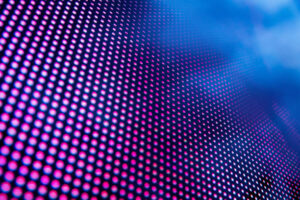
COB designs reduce distances between LEDs. This reduction supports higher pixel density but increases thermal density. As a result, COB modules require advanced substrates. Engineers now deploy aluminum-based PCBs and nano-ceramic layers. These materials lower thermal resistance and create broader heat channels.
Moreover, engineers now integrate thermal pads behind COB surfaces. These pads draw heat toward the cabinet structure. Through this added movement, heat spreads evenly, reducing local peaks. Uniform heat distribution extends LED lifespan and improves color stability. Consequently, packaging decisions influence long-term reliability even more than cabinet shape.
Power Systems and Their Impact on Heat Load
Power delivery directly affects temperature. When a display demands higher brightness, the driver system increases output. This output generates additional heat. Therefore, ultra-thin designs must accommodate strong drivers while managing thermal growth.
Engineers optimize power distribution by locating drivers away from dense LED blocks. Through balanced placement, they avoid high thermal clusters. Although space remains limited, optimized distances allow air to move more freely. Better airflow lowers overall thermal load.
Additionally, engineers now segment drivers. This segmentation reduces load concentration in any single area. Through smarter segmentation, the entire cabinet maintains a steadier thermal profile. Because heat spreads evenly, cooling pathways become more efficient. Ultra-thin systems benefit greatly from this balanced approach.
Furthermore, engineers develop new low-loss power circuits. These circuits reduce internal heat generation. They improve conversion efficiency and lower wasted energy. By increasing efficiency, they indirectly lower cabinet temperatures. This improvement supports thinner structures without overheating risks.
Material Science as the Foundation of Thermal Control
Material choices define thermal behavior. Engineers now seek materials that remain lightweight while offering strong heat transfer capability. Aluminum alloys remain common, but new blends offer higher conductivity with lower weight. These blends support ultra-thin designs by increasing thermal diffusion.
In addition, graphene-enhanced composites have gained attention. These composites move heat rapidly through tiny conductive channels. Although still emerging in LED displays, they show strong promise. Their thin profile and high conductivity match the demands of ultra-thin advertising screens.
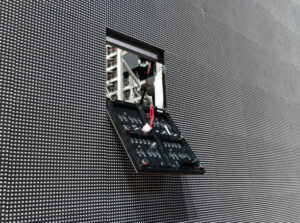
Engineers also integrate heat-spread layers into the rear cabinet surfaces. These layers move heat away from LED modules. Through broad diffusion, these layers prevent local overheating. While invisible to users, these layers form the backbone of thermal engineering in modern displays.
Thermal interface materials now play a larger role as well. Engineers apply them between modules and cabinet frames. These interfaces fill microscopic gaps. As a result, they increase the contact area and lower the resistance. This improved contact accelerates heat movement into external surfaces.
Structural Ventilation Strategies for Thin LED Designs
Ventilation remains essential even when cabinet thickness decreases. Engineers examine airflow dynamics to find efficient routes for hot air. Through controlled vents, they guide warm air outward and draw cooler air inward.
Ultra-thin displays cannot rely on large fans. Therefore, natural convection shapes most ventilation strategies. Engineers adjust vent geometry to boost convection. These vents create vertical channels where warm air rises smoothly. As warm air escapes, cooler air enters through lower openings.
Some modern systems implement micro-vent networks. These networks allow subtle airflow along edges and corners. Although small, they support continuous air movement. Continuous movement prevents stagnant heat pockets.
To maintain structural strength, vents must follow load paths. Engineers reinforce vent zones with internal ribs. These ribs maintain rigidity even when cabinet walls become thinner. Through smart reinforcement, ventilation, and durability remain balanced.
Thermal Simulation and Digital Testing in Modern Development
Digital engineering now guides most design decisions. Thermal simulations map temperature zones across the entire display structure. These maps help engineers predict how heat moves through ultra-thin systems.
Through simulation, they test various cabinet shapes. They compare cooling patterns under bright outdoor conditions. They adjust the layout geometry until the heat spreads evenly. Because simulations run quickly, engineers test many revisions. This rapid iteration increases accuracy.
Simulation also guides material selection. Engineers compare thermal resistance values. They test metal blends, composite layers, and PCB structures. Through comparison, they identify ideal combinations for specific thickness goals.
Furthermore, engineers run long-cycle thermal tests digitally. These tests predict behavior over thousands of hours. As a result, they estimate aging trends. They then adjust structural thickness or material density to support long service life.
Balancing Thin Aesthetics With Long-Term Reliability
Although ultra-thin designs improve aesthetics, reliability must remain the core objective. Engineers prioritize stability when finalizing structural form. They evaluate deformation, heat cycles, and external forces.
Long-term thermal expansion must be considered. Even small temperature swings may stress thin frames. Therefore, engineers use flexible structural joints. These joints compensate for subtle expansion. With proper joint design, fragile areas remain stable.
Moreover, connectors and modules must maintain alignment. Slight shifts may create visible seams. Engineers, therefore, enhance module locking systems. These locking systems keep modules stable even under heat cycles.
Finally, EMC shielding becomes more complex in thin designs. Shielding layers must block interference while remaining slim. Engineers use optimized mesh patterns and conductive layers. These layers maintain signal stability without adding bulk.
Summary: The Engineering Path Toward Slimmer, Cooler LED Displays
Ultra-thin LED displays represent a major engineering achievement. Their slim profiles enhance aesthetics and expand installation options. Yet they demand advanced thermal strategies. Through improved packaging, optimized power systems, enhanced materials, and detailed simulations, engineers now design advertising LED display screens that stay cool despite thin structures.
This evolution reshapes expectations in the advertising market. Users gain elegant systems with reliable thermal behavior. Engineers achieve a balance between design freedom and thermal control. As materials and simulations advance, ultra-thin displays will continue evolving. Their performance will rise even as structures grow slimmer. The industry now moves toward a future where thickness no longer limits thermal stability.

About author


Leave a reply