
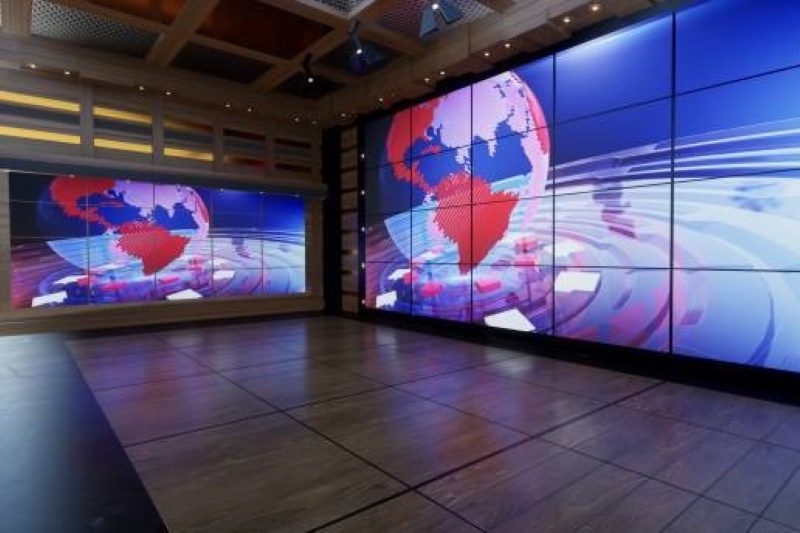
The Living Display: How Modular LED Video Walls “Grow” with Your Creative Needs Like LEGO
Once locked in place, traditional screens froze design potential and future growth. Previously, changing size or shape demanded full teardown and costly reconstruction. However, modular LED video walls have broken this rigid, single-use mindset. Instead, designers now treat displays as flexible systems, not fixed products. By assembling interlocking modules, screens gain the ability to expand and adapt.
Like LEGO bricks, each module supports creative freedom and scalable growth. As a result, the digital canvas evolves with space, technology, and vision. Ultimately, modular LED walls shift from one-time purchases to long-term partners.
1. Beyond the Purchase: The Screen as a “Living System.”
When we describe modular LED technology as “growing,” we are highlighting a fundamental shift in the lifecycle of a product. In the “Fast Tech” era, most devices have a predetermined expiration date. A modular LED video wall solution, however, is designed to be a “Living System.”
Breaking the “Decoration Set”
In high-end residential or commercial spaces, the environment is rarely static. A living room might function as a cozy lounge today but transform into a professional home cinema tomorrow. A boutique might feature a minimalist aesthetic this season but require a maximalist “visual takeover” for a summer campaign.
-
The Modular Advantage: Instead of being a permanent fixture that limits the room, the modular wall adapts. You can start with a 110-inch standard display and, as your needs evolve, add more tiles to cover the entire wall. The screen is no longer a guest in the room; it is a participant in the room’s evolution.
The “Living” Partner
A modular wall is a “living partner” because it facilitates a continuous dialogue with the user. It asks, “How much space do you have today?” and “What is your vision for tomorrow?” This sustainability ensures that your investment never becomes obsolete; it simply waits for its next expansion.
2. The “LEGO” Logic: Mechanical Simplicity and Creative Complexity
The comparison to LEGO is more than a metaphor—it is a description of the mechanical precision found in modern LED video wall solutions.
Standardized Interconnectivity
Just as LEGO bricks use a universal stud-and-tube design, modular LED panels utilize standardized power and data connectors.
-
Seamless Expansion: To “grow” the wall, you simply snap a new module into the existing framework. The control system automatically detects the new hardware, maps the pixels, and extends the desktop.
-
Structural Integrity: Advanced locking mechanisms ensure that no matter how large the wall becomes, the structural alignment remains sub-millimeter perfect. To the viewer, the “grown” wall appears as a single, flawless piece of glass.
Reshaping the Canvas
Modularity isn’t just about getting bigger; it’s about getting different.
-
Non-Linear Growth: You can move modules from a horizontal orientation to a vertical “totem” style. You can create L-shapes that wrap around corners or staggered “pixel art” layouts where individual modules are separated by physical space. Like building a LEGO castle, the “blueprint” is entirely in the hands of the creator.
3. Future-Proofing Through Evolutionary Upgrades
One of the greatest fears in technology investment is “The Next Big Thing.” Modular LED video wall solutions solve this through the logic of component-level upgrades.
Resolution and Pitch Evolution
If the industry shifts from 4K to 8K, or if a new “Micro-LED” module with higher brightness becomes available, you don’t necessarily need to replace the entire installation.
-
Module Swapping: In many professional systems, the mounting frame and power infrastructure can remain in place while the “pixel cards” are upgraded. This allows the wall to “grow” in intelligence and clarity without the waste of a full teardown.
-
Sustainable Aesthetic: This evolutionary path aligns with modern “Green” building standards by reducing electronic waste. You are upgrading the “brain” and “eyes” of the wall while keeping its “bones.”
4. Strategic Applications: Where “Growth” Matters Most
The ability for a screen to “grow” provides tangible ROI in various high-stakes environments:
-
Retail & Flagship Stores: Retailers can start with a modest display during a soft launch and expand to a full-scale immersive “Experience Zone” as the store gains popularity.
-
Corporate Hubs: As a company grows from a startup to a multinational, its boardroom display can scale alongside its headcount and data-visualization needs.
-
High-End Residential: Homeowners can begin with a “standard” TV-sized installation and gradually expand it into a floor-to-ceiling digital art gallery over several years.
5. The “Dialogue” of Maintenance: Resilience in Modularity
A “Living System” must also be able to “heal.” In traditional large-format displays (like a 98-inch LCD), a single dead pixel or a scratch on the glass means the entire unit is compromised.
-
Localized Healing: In a modular LED video wall solution, if one module is damaged, you simply “pluck” it out and replace it with a new one—often while the rest of the screen is still running (Hot-Swapping).
-
Color Calibration Harmony: Advanced software allows the new module to “learn” the color profile and brightness of its neighbors, ensuring that the “healed” spot is indistinguishable from the rest of the wall. This resilience is the bedrock of the wall’s long-term life.
6. Conclusion: From Consumption to Collaboration
The modular LED wall represents the end of the “disposable tech” era in display design. It is a transition from a product you consume to a platform you collaborate with. By embracing the LEGO-style logic of growth, expansion, and evolution, users are freed from the physical limitations of the “box.”
Your wall is no longer a static rectangle; it is a dynamic, growing entity that reflects your ambition. Whether it’s reaching for the ceiling, wrapping around a corner, or upgrading its resolution to match the future, the modular LED video wall solution proves that the best technology is that which grows with us.

About author

Leave a reply