
Die-Cast Aluminum LED Module Heat Dissipation: How All-Metal Structures Reduce Energy Consumption by 30%
When selecting outdoor and indoor LED displays for commercial advertising, sports arenas, or live event venues, operational cost and long-term reliability are key considerations for buyers. While many know that die-cast aluminum cabinets are lightweight and easy to handle, their thermal conductivity and energy-saving benefits are often understated.
A common question raised by billboard operators and display procurement managers is: “Beyond lightweight handling, what actual advantages does die-cast aluminum offer for heat dissipation and energy efficiency, and why do LED screens vary so drastically in power consumption?”
Understanding the relationship between cabinet metallurgy, thermal dissipation pathways, and energy efficiency is critical to selecting an LED display that minimizes operating costs while maintaining peak brightness.
Thermal Metallurgy: Die-Cast Aluminum vs. Plastic or Iron Cabinets
Heat is the primary enemy of LED display performance. Excessive internal heat accelerates LED diode degradation, causes color shift, and places continuous thermal stress on power supply units (PSUs) and receiving cards.
| Thermal Management Factor | Conventional Iron or Plastic Enclosure | Die-Cast Aluminum Enclosure |
|---|---|---|
| Heat Transfer | Traps more heat inside the enclosure | Transfers heat directly through the metal housing |
| Thermal Conductivity | Relatively low | High thermal conductivity |
| Heat Dissipation | Relies mainly on internal air convection | Uses the enclosure as an integrated heat dissipation path |
| Internal Temperature | More likely to accumulate heat | Promotes faster heat removal |
| Component Protection | Higher thermal stress on electronics | Helps reduce thermal stress |
| Long-Term Reliability | Greater risk of heat-related degradation | Supports more stable continuous operation |
1. Superior Thermal Conductivity
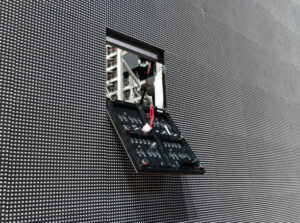
Die-cast aluminum possesses a thermal conductivity significantly higher than standard sheet metal iron and far superior to traditional plastic module backing. By utilizing the entire cabinet structure as a giant heat sink, all-metal designs draw thermal energy away from internal electronics rapidly.
2. Expanded Heat Dissipation Surface Area
Full-metal cabinet architecture provides up to three times the effective heat dissipation surface area of conventional central control boxes. This efficient thermal pathway lowers power supply operating temperatures by more than 10°C and reduces receiving card temperatures by up to 30°C. Lower component temperatures directly decrease electrical resistance, translating to up to 30% lower overall energy consumption.
High Brightness Without Overheating: The 10,000 Nits Benchmark
Outdoor commercial displays need extremely high brightness to remain visible under direct sunlight. However, achieving 10,000 nits typically requires higher electrical current and generates additional heat.
10,000-Nit Display Thermal Management
The relationship between brightness, power consumption, and heat dissipation directly affects outdoor display performance.
High-Current Power Input
↓
Higher LED Power Consumption
↓
Greater Heat Generation
↓
Advanced Thermal Dissipation Required
Conventional display cabinets can trap heat inside the enclosure. As internal temperatures rise, components may experience faster degradation and reduced operating life.
By contrast, die-cast aluminum display cabinets use their metal structure as an integrated heat sink. The aluminum body transfers heat away from internal components and releases it into the surrounding air.
Conventional Cabinet vs. Die-Cast Aluminum Cabinet
| Thermal Performance | Conventional Cabinet | Die-Cast Aluminum Cabinet |
|---|---|---|
| Heat Dissipation | Heat can accumulate internally | Aluminum body dissipates heat efficiently |
| Operating Temperature | Higher internal temperature | Lower component operating temperature |
| Cooling Method | Often requires active cooling | Supports passive heat dissipation |
| Energy Demand | Higher cooling power consumption | Can reduce cooling-related energy use |
| Component Protection | Greater thermal stress | Better thermal stability |
Without an optimized thermal structure, high-brightness operation can cause thermal throttling, accelerated component aging, and higher operating costs.
Structural Versatility: Curved and Straight Outdoor Architecture
1. Modular 640mm x 640mm Dimensions
A standardized 640mm x 640mm footprint strikes the ideal balance between structural strength, lightweight handling, and fast assembly or disassembly during installation and routine maintenance.
2. Seamless Curved and Flat Display Designs
To accommodate creative outdoor building facades, corner billboards, and immersive stage backdrops, modern die-cast cabinets support both straight and curved interlocking connection systems. Precision-machined aluminum frames ensure tight seam tolerances across both flat walls and concave or convex smooth arc configurations.
3. All-Weather Waterproof and Dustproof Sealing
Outdoor installations demand robust environmental protection. Precision-molded die-cast aluminum cabinets provide airtight, dustproof, and waterproof protection to shield internal driver ICs, power supplies, and LED arrays from harsh weather conditions.
Summary and Practical Buyer Advice
Choosing an energy-efficient LED display goes beyond evaluating initial diode brightness—it requires evaluating cabinet metallurgy and thermal design. By selecting a die-cast aluminum LED module with an all-metal chassis, commercial operators lower internal component temperatures, prevent heat-induced diode degradation, and achieve up to 30% energy savings over the display’s operational lifespan.
Professional Commercial LED Display Solutions from Madder
At Madder, we specialize in engineering high-performance die-cast aluminum LED display screens built for commercial advertising, sports arenas, outdoor events, and cultural activity centers.
-
Precision 640mm x 640mm Die-Cast Aluminum Cabinets: Engineered for high strength, ultra-lightweight portability, and rapid assembly and disassembly.
-
Superior Thermal Efficiency: All-metal cabinet architecture maximizes heat dissipation, lowers internal operating temperatures, and delivers up to 30% lower energy consumption compared to conventional enclosures.
-
Versatile Straight & Curved Configurations: Designed with flexible locking systems that support both flat video walls and seamless outdoor curved LED display installations.
-
Robust Weatherproofing: Fully dustproof and waterproof construction guarantees long-term durability and stable visual performance across demanding indoor and outdoor environments.
Optimize your display installation with energy-efficient LED technology. Contact the technical team at Madder today to discuss your project requirements!

About author


Leave a reply