
Unveiling the Hidden Costs of Curved Rental LED Screens: Understanding the Often Overlooked Factors
1. Understanding Curved Rental LED Screens
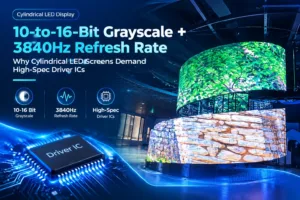
Curved rental LED screens have become an increasingly popular solution for event production and visual display applications. Unlike conventional flat LED screens, their curved structure creates a more immersive viewing experience and helps audiences maintain a clear image from different positions.
In large venues, audience seating is not always fixed or evenly distributed. Therefore, curved screens can provide wider and more consistent viewing coverage. Their curved surface also helps reduce the visual limitations and inactive areas that may occur with traditional flat displays.
Moreover, the advantages of curved rental LED screens go beyond visual performance. Their flexible geometry can create a more engaging presentation environment for conferences, exhibitions, corporate events, product launches, and live performances.
At the same time, the curved structure can complement modern architectural spaces. As a result, event organizers can combine high-resolution content with a more sophisticated stage or venue design.
Curved rental LED screens are also available in different sizes, pixel pitches, and aspect ratios. This flexibility allows rental companies and event planners to select a configuration that matches the venue layout, audience size, and content requirements.
However, choosing a curved rental screen involves more than comparing the basic rental price. Specialized hardware, on-site rigging, transportation, spare parts, and installation services can all affect the final project cost. Therefore, understanding these potential expenses is essential for accurate event budgeting.
2. Specialized Connecting Hardware for Curved Rental LED Screens
When planning a curved LED screen rental, event organizers should consider the additional connecting hardware required for curved configurations.
Unlike standard flat LED displays, curved screens use components designed to accommodate different installation angles. These components may include angle locks, curved connectors, locking mechanisms, and specialized mounting accessories.
Angle Locks and Curved Connectors
Angle locks play an important role in maintaining the structural integrity of a curved LED display. They allow individual screen cabinets to connect at specific angles and help create the required concave or convex curvature.
In addition, proper locking hardware helps keep the cabinets aligned during operation. This is particularly important for large rental LED walls, where even small alignment errors can affect the overall visual appearance.
However, some rental quotations may exclude specialized angle locks from the standard equipment package. Therefore, buyers should confirm whether these components are included before signing a rental agreement.
Similarly, curved connectors enable smooth transitions between adjacent screen sections. Because curved cabinets require different connection geometry from flat cabinets, standard connectors may not always be suitable.
As a result, event planners should request a complete equipment list when comparing suppliers. This approach makes it easier to identify additional hardware costs before the project begins.
3. On-Site Rigging and Structural Support Costs
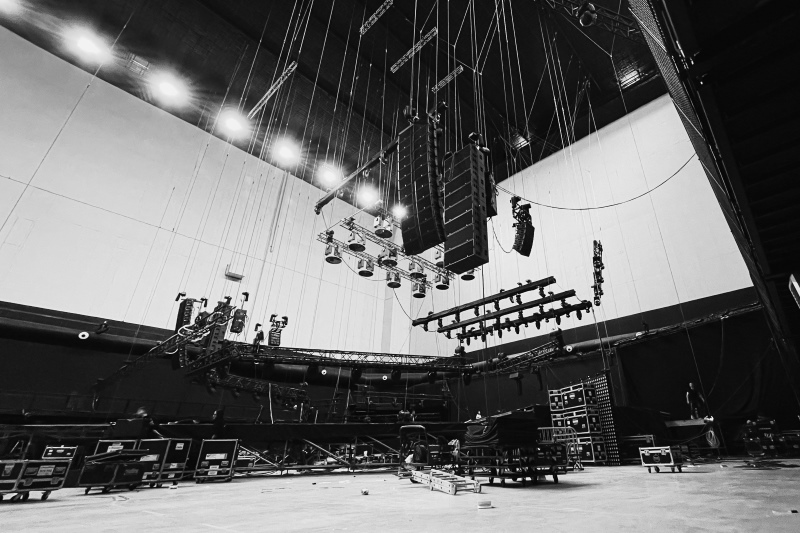
Another important cost factor is on-site rigging for curved rental LED screens. Proper installation is essential for both screen performance and event safety.
Depending on the venue layout, curved LED screens may require overhead suspension from trusses, beams, or other approved structural points. Before installation, the venue should therefore be assessed to determine whether its existing structures can safely support the display system.
If existing structures cannot provide sufficient support, the project may require additional ground support systems, trusses, or structural frames. These requirements can increase the total installation cost.
Furthermore, curved LED screen installation often requires experienced technicians. Professional crews may need to handle cabinet alignment, angle adjustment, signal connections, power distribution, and structural safety checks.
Specialized rigging equipment can also add to the overall rental cost. In addition, local safety regulations and venue requirements may affect installation procedures and labor requirements.
Therefore, rental providers should clearly define what their quotation includes. A professional quotation should distinguish between:
- LED screen rental
- Curved connecting hardware
- Rigging equipment
- Ground support structures
- Installation and dismantling
- Technical labor
- Transportation
- On-site technical support
This transparent pricing structure helps event organizers avoid unexpected expenses during installation.
4. Transport Strategies and Spare Parts Planning
Transportation is another important consideration when renting curved LED screens. Their unique cabinet geometry requires careful packaging and handling throughout the logistics process.
For example, curved LED cabinets may require custom flight cases designed specifically for their shape and dimensions. These cases protect the cabinets during loading, transportation, storage, and unloading.
Compared with standard flat LED cabinets, curved cabinets may require more specialized packing solutions. Proper protection helps reduce the risk of scratches, structural damage, connector failures, and other transportation-related problems.
Transportation Planning
Event organizers should also consider the transportation route and vehicle requirements before shipment.
Because LED display cabinets contain sensitive electronic components, excessive vibration and impact can affect their performance. Therefore, transportation providers should use appropriate loading methods and protective materials.
Secure stacking, padded surfaces, and controlled handling can help reduce transportation risks. In addition, working with logistics companies experienced in professional audiovisual equipment transportation can further improve equipment safety.
Spare Parts for Event Reliability
Even with careful transportation and installation, unexpected equipment failures can still occur during live events.
For this reason, rental companies should maintain an adequate inventory of spare LED modules, power supplies, receiving cards, cables, and other critical components.
Having replacement parts available allows technicians to respond quickly when a module or component fails. Consequently, operators can minimize downtime and maintain uninterrupted event presentations.
For large-scale events, spare parts should ideally be available at the venue throughout the event. This strategy reduces response time and provides an additional layer of operational security.
5. How to Control the Total Cost of Curved LED Screen Rental
The actual cost of a curved rental screen depends on more than the LED cabinet rental rate.
Event organizers should evaluate the complete project cost, including:
| Cost Factor | Key Consideration |
|---|---|
| LED Screen Rental | Screen size, pixel pitch, quantity, and rental duration |
| Curved Hardware | Angle locks, curved connectors, and mounting accessories |
| Rigging | Trusses, suspension points, and structural support |
| Installation | Technician labor and installation complexity |
| Transportation | Flight cases, vehicles, loading, and unloading |
| Spare Parts | Replacement modules and critical electronic components |
| Technical Support | On-site engineers and troubleshooting services |
| Venue Requirements | Structural assessment and local safety regulations |
Therefore, comparing suppliers based only on the advertised screen rental price may not provide an accurate picture of the final budget.
Instead, buyers should request a complete turnkey quotation covering equipment, hardware, transportation, installation, dismantling, and technical support.
Technical Summary
Curved rental LED screens provide an immersive visual solution for exhibitions, conferences, concerts, corporate events, and large-scale presentations. However, their unique curved structure also creates additional technical and logistical requirements.
In particular, specialized angle locks, curved connectors, rigging systems, custom flight cases, installation labor, and spare parts can significantly affect the total rental cost.
Therefore, event organizers should evaluate the complete system rather than focusing only on the LED screen rental price. By planning hardware, structural support, transportation, and technical services, buyers can improve installation efficiency and reduce unexpected event costs.
About author

Leave a reply